Category: Articles

  • Why You Should Get A Resale Endowment Policy (REPs) Instead of Starting A New One

    Brand New VS Resale Endowment Policies

    Why are the Yields Higher With A Resale Endowment Policy (REPs)?

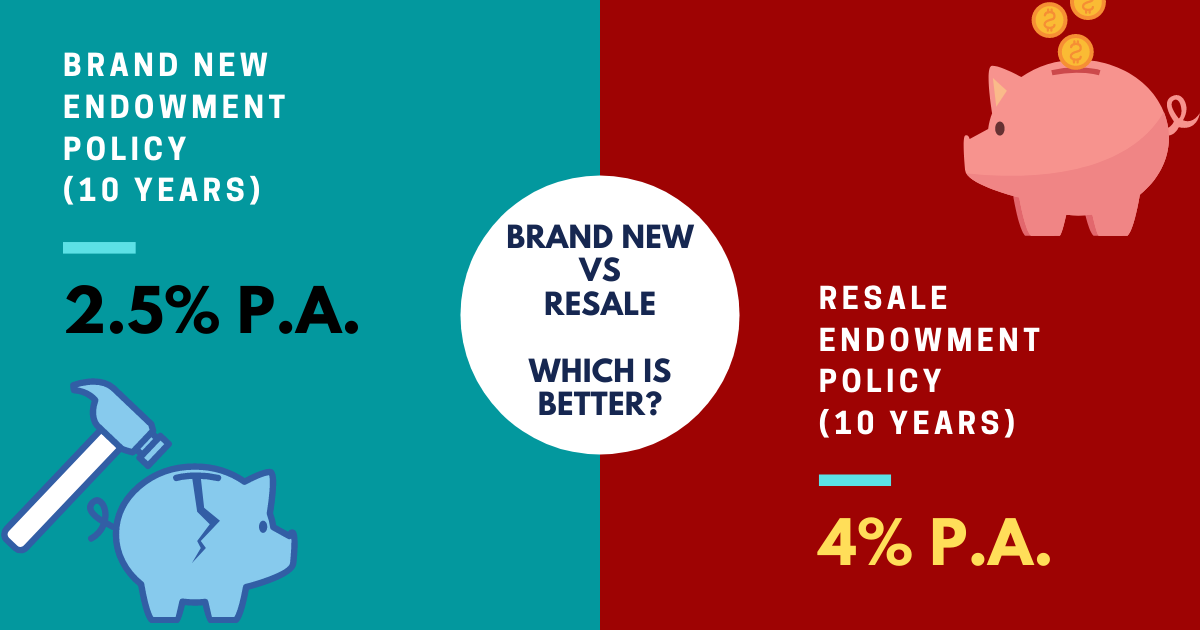
    In the insurance market, a brand new endowment plan of 10 years typically has a yield of 2.5% P.A. Whereas a 10 years Resale Endowment Plan has a yield of 4% P.A. instead.

    That’s a whopping 1.5% more!

    How is that even possible when both plans are the same product from the same insurance company? Why is the interest so much higher with a Resale Endowment?
    Before we analyse the practical aspect of achieving higher yield from a Resale Endowment Plan, let us go through some endowment basics.

    What exactly is an Endowment (participating policies)?

    Endowment insurance products are often marketed as a savings plan to help you meet a specific financial goal, such as paying for your children’s education, or building up a pool of savings over a fixed term. Participating endowment policies share in the profits of the company’s participating fund. Your share of profit is paid in the form of bonuses or dividends to your policy. Endowment policies have cash values which will build up after a minimum period, and this differs from product to product.

    Growth Phases of an Endowment Policy

    There are three growth phases in an endowment policy, namely the Slow Phase, Mid Phase and Fast Phase.

    Slow Phase – This phase occurs during the first few years of the endowment policy. Due to the distribution costs applied, an endowment policy usually has zero cash value in the first two years. As a result, the early period growth of the policy is very limited, explaining why endowment policies are often sold at a minimum tenure of 10 years.  

    Mid Phase – This occurs when the endowment policy has been running for a few years, with bonuses declared and extra interest accumulated from the bonuses declared earlier. At this phase however, the policy might not have even breakeven yet.

    Fast Phase – The fast phase occurs towards the last few years of the endowment policy. This is the period where higher bonuses are declared by the insurance companies as part of the contract.

    Higher Yield with Resale Endowment Plans

    When you take over a Resale Endowment Plan, you are instantly skipping the slow growth phase of the policy and jumping right into the mid or fast phase. During this process, you also do not have to absorb the distribution costs incurred in the event if you purchase a brand-new endowment plan.
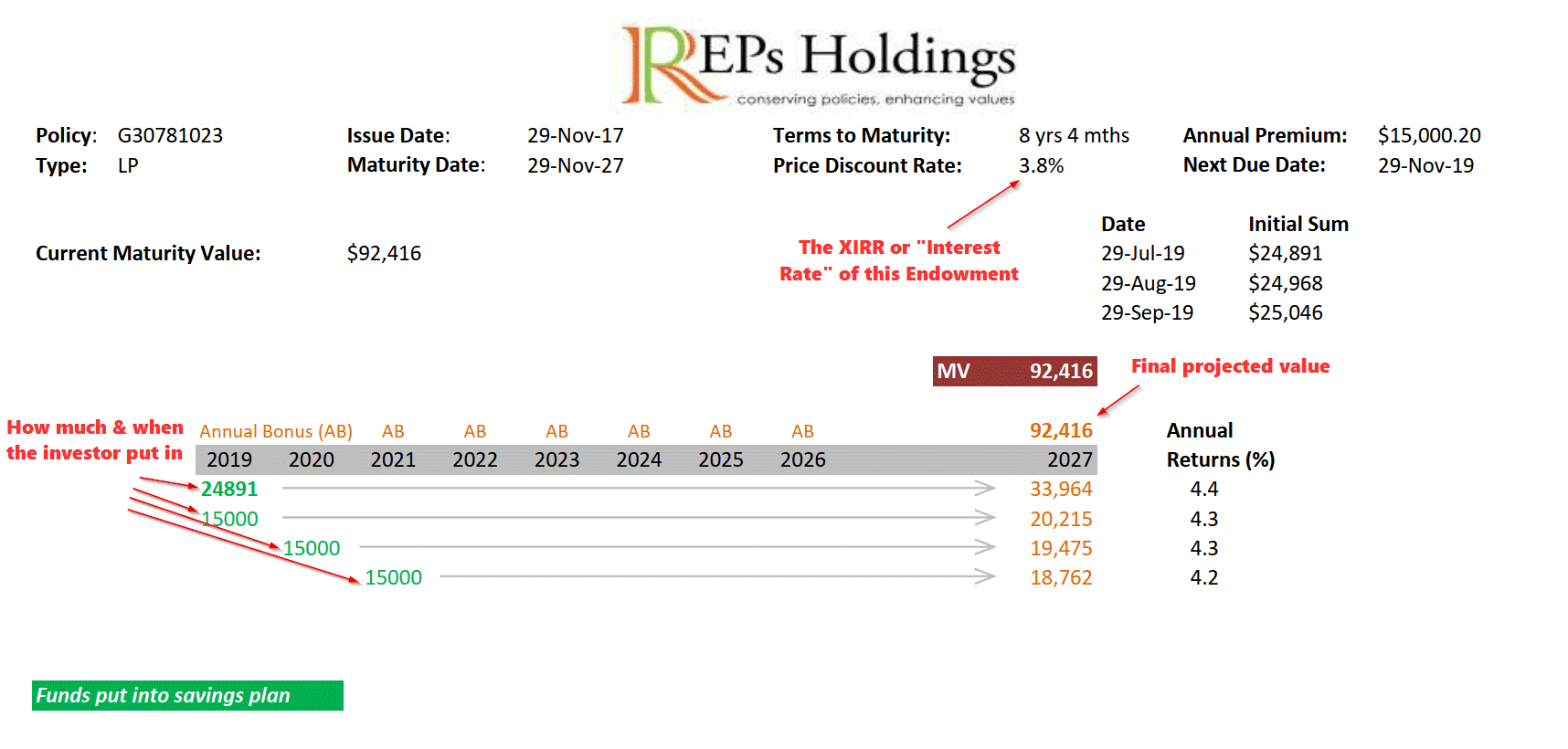
     Great Eastern Endowment Policy

    Let’s take a look at an example.

    This policy was originally a 10-year endowment plan (29-Nov-17 to 29-Nov-27). The original owner of this policy sold it to us less than 2 years of holding it. The numbers in green show the cash flow that he/she will need to put in.

    In this case, the new owner of this policy will need to fund $24,891, and (3 x $15,000 = $45,000). Do note that the premium for the first 2 years ($15,000 x 2 = $30,000) have already been paid for. When the new owner pays $24,891 to take over the policy in July 2019, there will be an immediate savings of almost $5000. 

    When the policy matures 8 years later in 2027, the policy will pay out $92,416. By skipping the distribution costs of the endowment policy and jumping right into the mid phase, the new owner enjoys a higher yield of 3.8% P.A. for a period of 8 years.

    And this is how you can enjoy higher, efficient savings within a shorter time-frame by purchasing a Resale Endowment Policy!

    Contact us today to find out more, or you could also take a look at our REPs List here.

  • Invest with Certainty under Uncertain Times

    safe-investment

    The current COVID-19 situation definitely spells a time of uncertainty right now. Humans have always been fearful of the unknown. However, it is even more in times like these that call for a calm and logical approach.

    It has been a roller coaster in the stock market and the market, literally. Panic and fear-mongering are causing people to panic sell stocks while also hoarding necessities like toilet paper and instant noodles. When will the market bottom? when will a vaccine be found? Nobody knows.

    The current market can prove to be daunting for investors who invest emotionally. The journey of those who are able to navigate their way systematically during this period might prove to be rewarding, however, how many of them can do so consistently? After all, fear and greed have shown mankind many times that it can cause us to make the most illogical decisions.

    Whether we are a savvy investor looking for diversification or a conservative investor seeking for capital protection, it would be ideal to have a safety net in place. During times of unfavourable conditions, while waiting for the storm to pass, it can be reassuring to know that we have a safety net to fall upon for our child’s education or even our own retirement plans.

    Resale endowment policies (REPs) could be one way to achieve such certainty when we need it. REPs are policies given up by policy owners and this presents an opportunity for one to take over such policies, resulting in a shorter tenure and high returns. REPs can provide one with predictability and certainty in times like this as we can be assured that the money and pay-out would be there when we need it the most, even in most volatile market conditions.

    Should you want to explore how to save with certainty, feel free to contact us.

  • Comparison of Singapore Bank Savings Account VS Resale Endowment Policies (REPS)

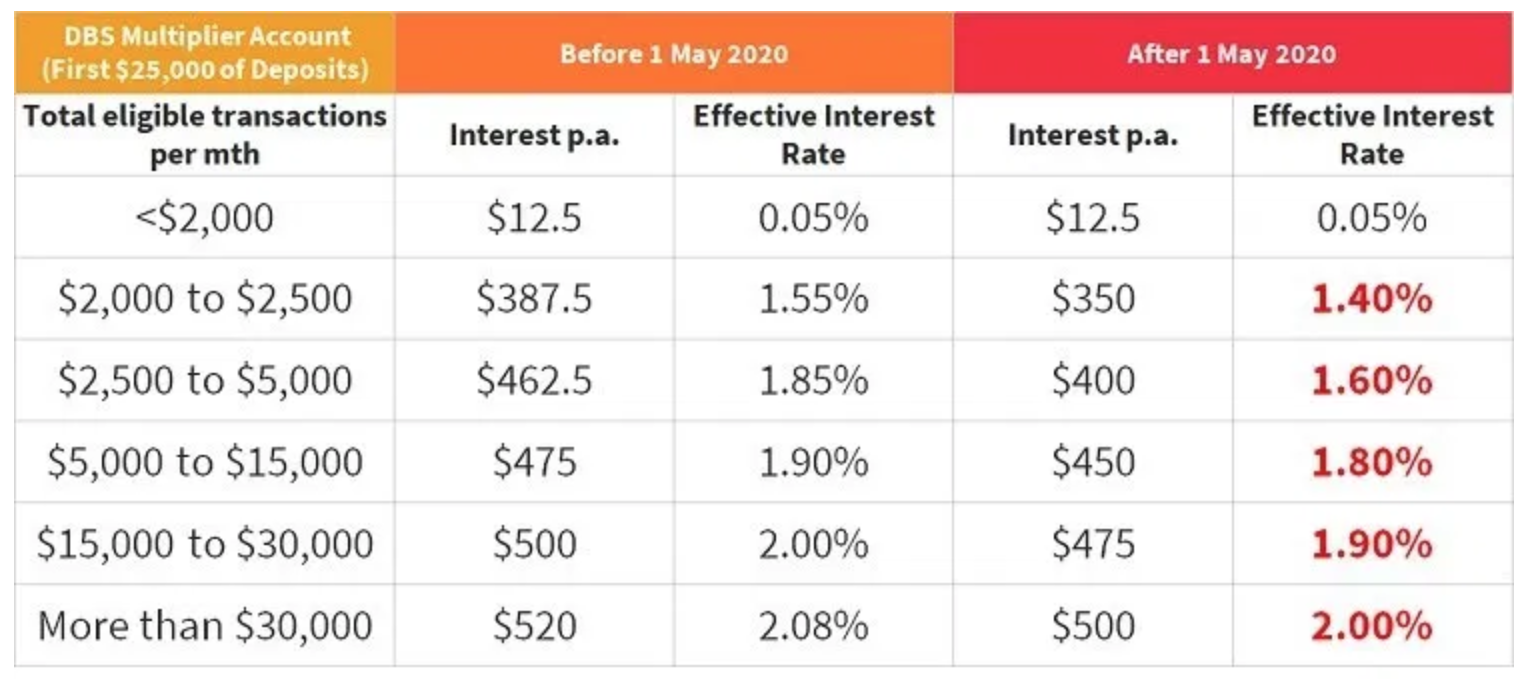
    Most of us park our money in a bank savings account as they offer higher interest rates than a typical standard bank account. However, amid the recent coronavirus pandemic, banks in Singapore have lowered their interest rates on their savings account.

    Furthermore, you are required to fulfill a number of criteria (salary crediting, credit card spending, GIRO transactions, and/or insurance and home loans) + have a certain amount of savings to enjoy the maximum effective interest rate.

     interest-rate-for-uob-one-savings-account-pre-and-post-1-may-2020

    interest-rate-for-ocbc-365-savings-account-pre-and-post-1-may-2020

    interest-rate-for-dbs-multiplier-savings-account-pre-and-post-1-may-2020

    Source: Heartland Boy

    Most banks have decreased their rates drastically by 1% lesser than usual on average. With the decrease in bank savings account interests, is there a better wealth instrument with the same stability available for us to park our money in?

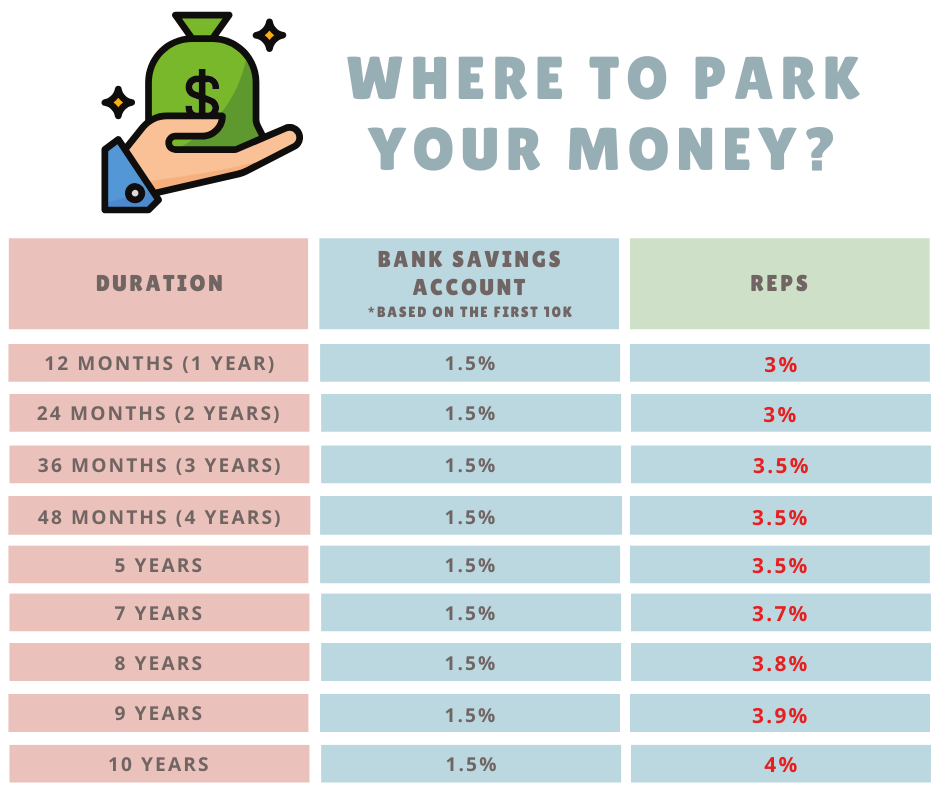
    Here’s a comparison chart on the returns one can get through investing in a bank savings vs investing in a REPS, based on $10k.

    comparison-of-investing-in-a-bank-savings-vs-reps

    Resale Endowment Policies (REPS), also known as traded endowment policies, are basically existing endowment plans (or whole life plans) that have been given up by their original policy owners before maturity. Instead of surrendering the plans to the insurer, the original policyholders sell it to a resale endowment provider.

    One might ask, is investing in a REPS as safe as parking my money in the bank? The answer is yes.

    Just like a bank savings account, REPS is a low maintenance and stable investment. This makes REPS suitable for all profiles, especially conservative consumers. REPS is covered and protected under High Capital Protection and Singapore Deposit Insurance Scheme (SDIC) as well, giving consumers a peace of mind.

    The best thing out of all? Other than just simply parking in your money, one does not have to fulfill other criteria to enjoy the projected returns that REPS offer.

  • Resale vs New Endowment

    Why investing in resale endowment policy is a wiser choice


    Resale endowment policies (REPs) are policies sold by the original policy owner to a third party who buys it for investment purposes. The new owner will enjoy a significantly higher return (sometimes even double the returns) than what a new endowment policy will get in today’s market. More importantly, the new owner will only need to wait for as short as 1 year to see his investment matures.
    In this article, we will discuss in depth the reason for the higher returns and shorter duration that REPs offer over a new policy. The calculations used in the article are based on the fundamental principle of time value of money (TMV). For readers who are not familiar with the concept, the TMV principle is to calculate the value of money at a particular point in time given the discount rate (or the annual investment return in our discussion).

    The basic reason for the higher return in REPs is that the investor is buying the policybelowthebook value (BV). In the first section we will calculate the BV of a firsthand policy at the end of each policy year. In the following section we calculate the investment return of a REPs investor who took over the policy at the middle of the policy term.

    Cost and return of a brand new policy 

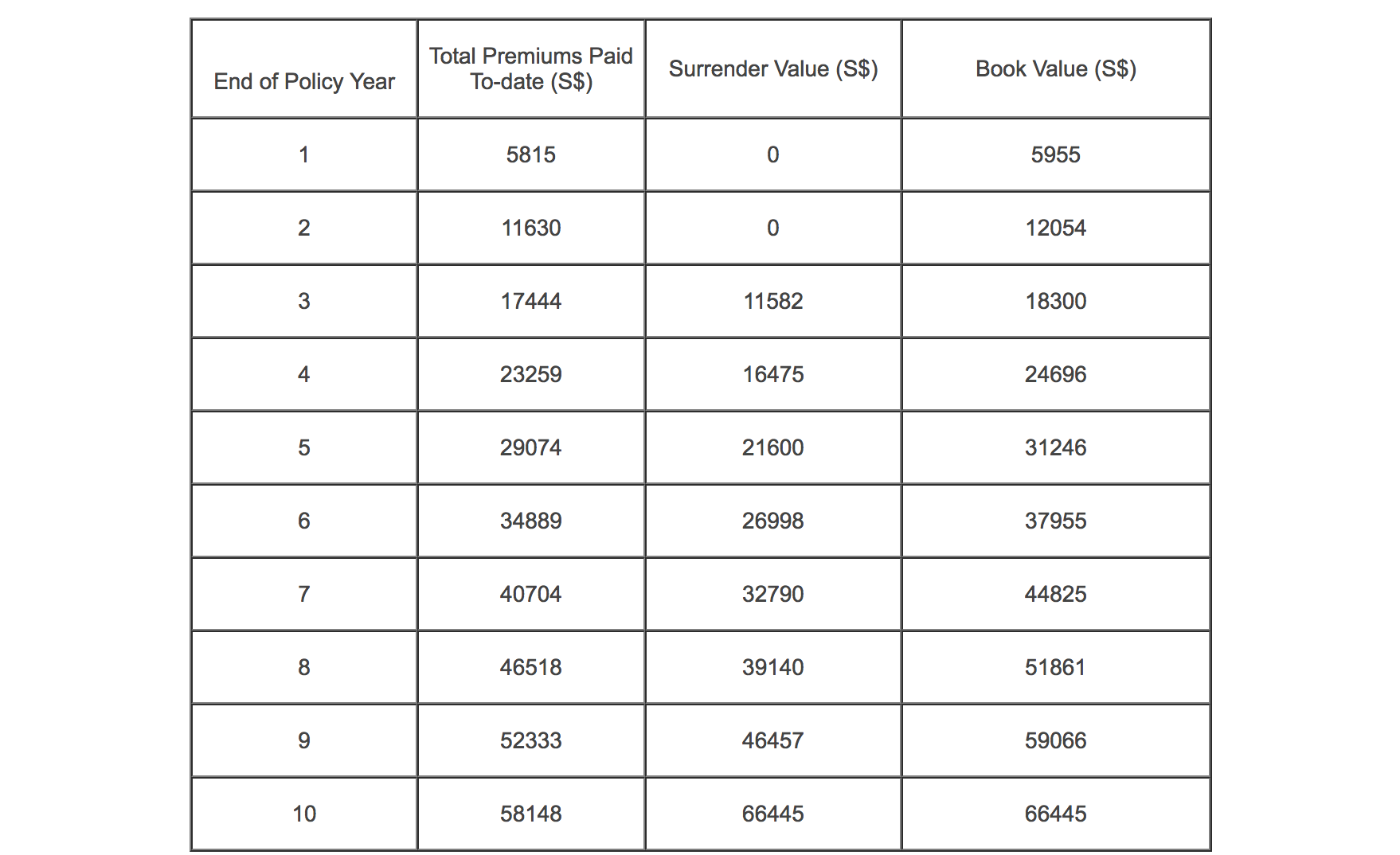
    We will consider the case of a 10 years regular premium endowment policy. The total premium paid to-date figures shown in Table 1 are extracted from the policy benefits illustration. To summarize the annual premium is $5815 and the maturity sum is $66445 at the end of 10 years. The surrender value (SV) in the third column is the amount the insurance company pays the policy owner if the policy is terminated before maturity.

    We calculate the investment return of the original owner assuming he paid the annual premium and held the policy to maturity. To determine the investment return we calculate the annual interest rate such that the sum of the yearly compounded premiums is equal to the maturity amount (For the technical inclined readers, the Excel command =RATE(10,5815,0,-66445,1) gives the rate of 2.41%). Next the BV is computed by calculating the future value of all past premiums compounded at 2.41% to the end of each year and it is tabulated in the last column of Table 1.

    We noted that the SV is substantially less than the total premium paid and SV because the policies distribution cost (commissions and administrative fees) are paid from the first few years of premiums. If the policies traded hand at a price between the SV and BV, the new owner will achieve a return better than the 2.41% original returns. In the next section we will examine the scenario where the REPs investor acquires the policy below the BV.

    Table 1: The premium paid; surrender value (SV) and book value (BV) for a 10 years endowment policy. Note that the premium is paid at the beginning of each time period.

    reps2

    * The amount is invested on the last day of policy ending year 5. Therefore the book value is equal to the initial investment sum as the effective compounding period is 0.


    Investment returns for REPs investor Consider the scenario in which the REPs investor takes over the policy at the end of year 5 for an initial sum of $28771 (at below the year 5 BV of $31246). The investor will also be responsible for the remaining 5 years of annual premium. Using the TVM formula in Excel, we calculate the investor’s annualised return to be 3.50% (=RATE(5,5815,28771,-66445,1)) which is 1.09% higher than the original policy return of 2.41%. One interesting thing to note is that the REPs purchase price is even lower than the total premiums paid over the first 5 years by the original owner, thus ensuring that the REPs investor will always outperform someone who bought a brand new policy. We calculated the REPs policy value by taking the initial purchase price and future premiums (which is the investor’s responsibility) and compounding them at 3.50%. The numbers are tabulated in the last 2 columns of Table 2. Due to the higher compounding rate the REPs investors get a higher return from the same underlying endowment policies!

    Table 2: Comparison of the returns of the REPs investor and the original policy owner


    reps2

    We have shown that an investment in REPs is a good choice if you are considering buying into an endowment policy. The returns are higher and the duration can be selected to meet the investors’ particular financial requirements. Start planning for your financial future now by taking action now.


  • Buy term and invest the rest

    What is “Buy term and invest the rest?”

    The underlying concept of “Buy term and invest the rest” is to replicate an endowment policy into its investment and protection components at a lower costs and/or higher protections. The protection component is best replicated using term insurance, which covers the policy owners for death and total permanent disability (TPD) for a fixed time period. Term insurance has no monetary value at the end of the policy terms.

    Why invest the “difference” in resale endowment?

    There are a multitude of investment instruments that the investor can choose from the crowded investment sphere such as units trust, shares, or bonds. Each instrument requires different amount of time and financial knowledge to analyse the investment risks and rewards. For small-scale investors with no inclination to monitor or to time the market, it is difficult to create and manage a diversified portfolio of equities and other assets.

    Exchange-traded fund (ETF) and unit trust (UT) investment addresses the above concern as professional fund managers invest on behalf of the unit holders. The pooling of money from many unit holders will achieve both diversification and systematic selection of equities/bonds. In spite of its many advantages, a common pool investment schemes like many other investment instruments have a serious drawback that is not widely recognised, i.e. a sudden and dramatic decline of asset prices across all asset classes concurrently. Such a scenario is happening with increasing frequency in this high volatility environment. A sudden plunge in the asset values at a time when the investor needs to cash out the investment is going to be disastrous, and it is especially catastrophic for retirees who may not have the luxury of time to wait for the eventual recovery.

    Resale endowment policies (REPs) is a synthetic endowment policy which combines the positive features of ETF and UT without the volatility associated with stocks. Similar to funds, the insurance company pools policy holders’ premium in a participating fund which is used to invest on behalf of the policy owners. Unlike ETF and UT, insurance participating fund have a unique feature of smoothing the return. Basically the profit earned during good years is held back to be added during years of poor performance, thereby ensuring a stable increase in the investment fund returns as opposed to the daily price fluctuations observed for stocks or ETF. Consequently the maturity date of the policy becomes less critical and the investor will not suffer any massive losses even if the policies matured during a market downturn.

    Conclusion

    The term plus REPs option offer a flexible means for policy holder to self-insurance at a lower cost and achieve higher returns.  The synthetic endowment policies are simple to implement as there is a specialized company in Singapore dealing with REPs, and term insurance are readily available from any life insurance companies.

    Call us now @ 6412 0121
  • Education Planning

    Increasing cost of Education

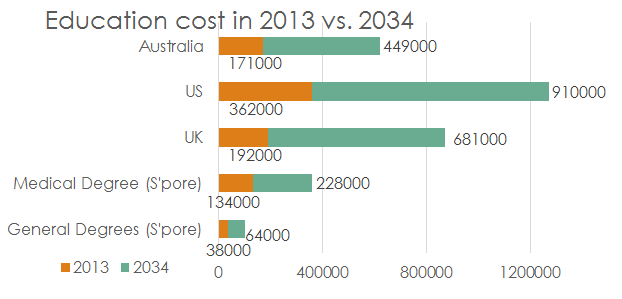
    As parents, we naturally want to get the best for our children. A university education will give them a good headstart in life. However, education cost is increasing over the years. In 20 years’ time, it can cost as high as S$910,000 if the child is pursuing a general degree in US. Education cost is not a small sum and requires early planning.

    1

    Why Resale Endowment is a good choice for your educational planning.

    • For education planning, you cannot put your money at risk. Investments like the property or stock market may be down at a time when you require the funds. You will want a plan that delivers secure and steady returns.
    • As the maturity dates of Resale Endowment are fixed and known, you can easily plan for your payout period.
    • Compared with taking a new savings plan from the start, the amount which you need to save will be lesser due to the higher compounded interest rates.
    • It is never too late to start planning. Resale Endowment Policies allow you to catch up on your savings goals by putting in a lump sum upfront.

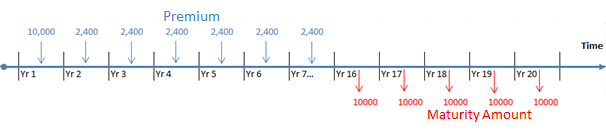
    Below is an example of how you can save a $10k intial sum with small regular amount of $2,400/year and yet achieve the goal of five regular payouts of $10,000/year at the end of 15 years. The five regular payouts ensure that your child have sufficient amount of money for school fees and living allowance at every start of the semester.

    2
    If you are looking for a Child Saving Program that is

    • Safe and Secure
    • Offer Steady Returns of 5 – 7%p.a.
    • Get ready your required funds in 10-18 years’ time

    Contact us today @ 6221 4770 / 9847 5336

    Let’s work towards your child’s educational planning.